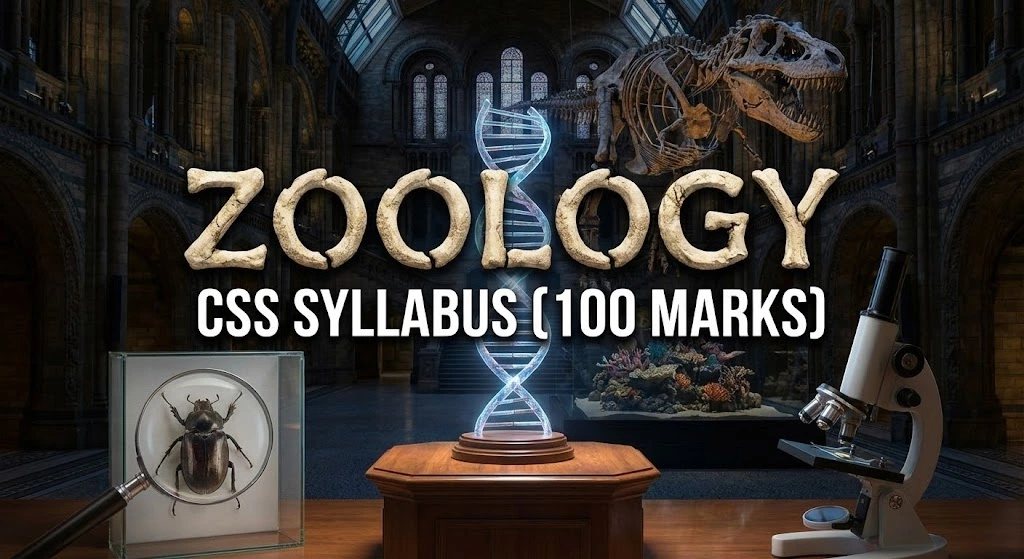
ZOOLOGY CSS SYLLABUS (100 MARKS)
I. Animal Diversity-Invertebrates
- Architectural pattern of an animal, Taxonomy and phylogeny, Major subdivisions of animal kingdom.
- Animal-Like Protists: The Protozoa
- evolutionary perspective
- locomotion and reproduction
- Protozoa of veterinary and medical importance
- Porifera
- Body wall
- skeleton
- water currents system
- Coelenterates
- Reproduction plan
- alteration of generation (Polymorphism)
- Coral reefs
- Platyhelminthes and Nematodes
- Parasitic adaptations
- medical importance
- Annelids
- Metamerism
- ecological importance
- Molluscs
- Modification of foot
- Feeding
- their role in the shell fishery
- Arthropods
- Modification in their mouth parts
- Role of arthropods as vectors in the transmission in microbial infection
- Arthropods and their ecological importance
- Echinoderms
- Characteristics
- Evolutionary perspective
- Relationships to other animals
- echinoderm characteristics
II. Animal Diversity-Chordata
- Hemichordates and Invertebrate Chordates
- Evolutionary Perspective
- Phylogenetic Relationships and considerations
- Fishes
- Structural and functional adaptations of fishes
- Amphibians
- Movement onto land
- early evolution of terrestrial vertebrates
- Reptiles
- Characteristics of reptiles
- adaptations in reptilians
- Birds
- Migration and navigation
- adaptations
- Mammals
- Structural and functional adaptations of mammals
III. Principles of Animal Life
- The chemical basis of animal life
- Brief introduction to bio-molecules
- carbohydrates
- lipids
- proteins
- nucleic acids
- Cell concept and cell theory
- Organization of cellular organelle (their structure and functions)
- Central dogma of cell biology (Transcription and Translation)
- Meiosis and Mitosis
- Protozoa
- Reproduction pattern in protozoan
- Parasitism in protozoan
- Mesozoza and Parazoa
- Porifera: Cells types, body wall and skeleton and water currents system
- Coelenterata: Reproduction plan and alteration of generation (Polymorphism)
- Tissues Types
- epithelial
- connective
- muscle
- nervous tissues
- organs and organ systems
- Enzymes
- function
- factors affecting their activity
- cofactors and coenzymes
- Energy Harvesting
- Aerobic respiration
- anaerobic respiration
- the major source of ATP
- Mendel’s law of inheritance
- Chromosomal basis of inheritance
- Multiple alleles
- Eukaryotic chromosomes
- Mutations
- chromosomal aberrations
- Ecological Concepts
- Interactions
- Concepts and components of ecosystem
- Food chain
- Food web
- Biogeochemical cycles
- Forests
- Biomes
- Wildlife conservation and management
- Environmental pollution
- Green house effect
- Acid rain
- Global warming
- climate change
- Evolution
- Darwinian evolutionary theory based on natural selection and the evidence
- Microevolution: Genetic variation and change within species
- Macroevolution: Species and speciation
- Allopatric
- Parapatric
- Sympatric speciation
IV. Animal Form and Function
- Protection, Support and Movement
- Integumentary system of invertebrates and vertebrates
- Animal muscles: the muscular system of invertebrates and vertebrates
- Digestion and Nutrition
- Feeding mechanism
- Digestion
- Organization and regional function of alimentary canal
- Regulation of food intake
- Nutritional requirements
- Internal Fluids and Respiration
- Internal fluid environment
- Composition of blood
- Circulation and respiration mechanisms
- Homeostasis
- Excretion
- Vertebrate kidney mechanisms
- Temperature regulation
- Nervous Coordination
- Nervous system and Senses
- Functional units of nervous system
- Synapses junctions between nerves
- Chemical Coordination
- Endocrine System
- Vertebrate endocrine glands and types of hormones
- Mechanism of hormones action
- Animal Behavior
- Learning
- Habituation
- Insight learning
- latent learning
- classical learning
- Control of Behavior
- social behavior
FPSC RECOMMENDED BOOKS List for ZOOLOGY CSS SYLLABUS
| S. No. | Title | Author |
|---|---|---|
| 1. | Integrated Principles of Zoology | Hickman Jr. C.P., Keen S.L., Larson A., Eisenhour D.J. |
| 2. | Zoology | Miller S.A. and Harley J.B. |
| 3. | Biology | Campbell N.A. |
| 4. | Evolution (2nd Edition) | Douglas Futuyma |
| 5. | Animal Behavior: An Evolutionary Approach (9th Edition) | John Alcock |
FPSC Official ZOOLOGY CSS SYLLABUS
Here is the link to the ZOOLOGY CSS SYLLABUS on the FPSC official website